Category:
SaaS Design
Client:
Department of Justice: Security Agency

Preview


My Approach
I was tasked with building and leading a design team as we integrated into a project that had been working without a design team for over a year. Our design team was reestablished in order to save a failing project. The developers had been building the product for over a year without any kind of design direction and the client was not pleased with how it was looking and functioning. The task was to come in and do a complete Heuristic evaluation and deliver our findings and suggestions on how to make the product more user friendly and cohesive. But first we had to fix the relationship the client had with the development team. We began by clearly documenting when and how we we were going to conduct our evaluation and then clearly show what the benefits of our findings would be. We started by building trust, we shared what we were going to do and then did exactly that.
Heuristic Evaluation
Once our team was cleared to do our evaluation we began by requesting as many demos of the product that the client would allow. We then screenshot and organized everything we saw. We broke down the Information Architecture of the system by following the site map and recreating it on our whiteboards using the screenshots. We then proceeded to follow the high level guidelines to a thorough evaluation, checking for 508 compliance, consistency, ease of us, expected outcomes, error handling, UX best practices, and system trustworthiness.
Once we gathered all of our findings we jumped into solutioning. We worked closely with the development team to make sure we integrated our findings into feasible development solutions. We wanted to make sure the UX suggestions we were proposing to the client were all feasible and what level of effort they would be so as to let the client decide which of the solutions made the most sense to move forward with. We wanted to make sure the client had a good understanding of impact to effort, so as part of our heuristic evaluation readout we also made sure to add in a visual impact/effort matrix. We t-shirt sized every UX suggestion and prioritized which of the UX solutions we felt were critical and which were nice to haves. We made sure to give the client all the necessary information for them to make the best decision on how to move forward with the product build. Ultimately, the client decided everything was critical and we began moving forward designing the proposed solutions.
Human Centered Design Process
I worked to integrate my design team seamlessly into our developers sprint cadence. In order to do this with the most effectiveness we had to design, document, and deliver a brand new order of operations. I set our design team as the spearhead of the operation. We moved to make sure the client was signing off on visuals, as well as functional requirements from the High Fidelity wireframes that my team was producing, instead of in production code. This shift in the process turned out to be one of our more valuable contributions to the project. We were able to iterate quickly and adapt to an ever changing list of business requirements. This allowed everyone to see and be comfortable with the flow of the system before it was developed.
North Star Workshop
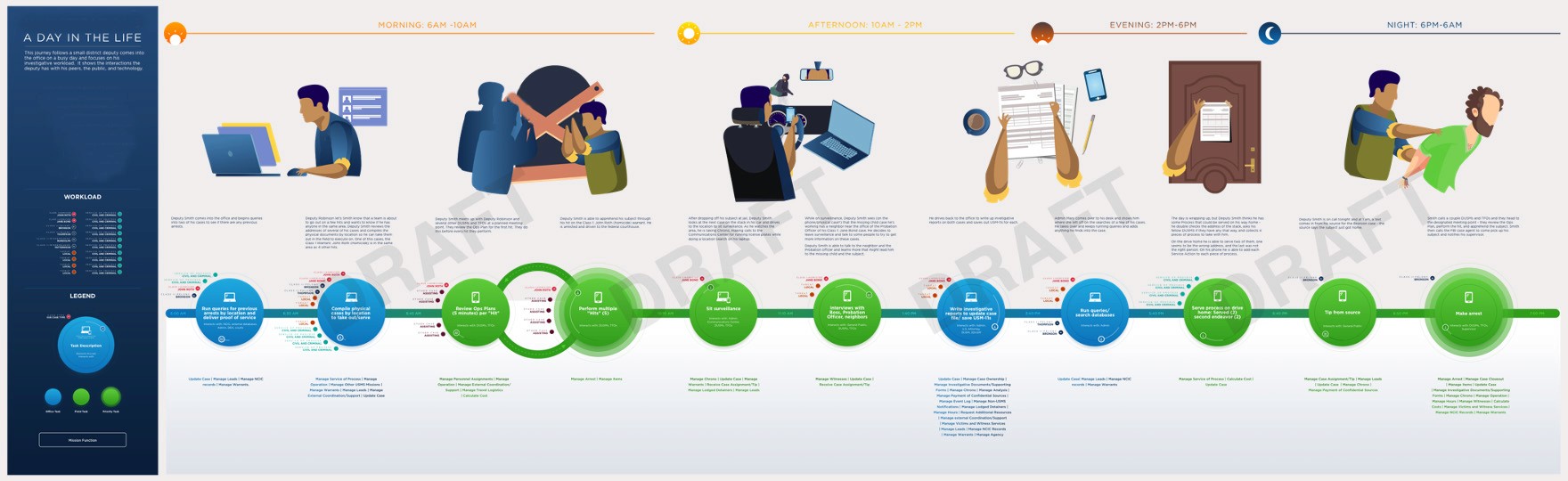
After this initial push to get the product consistent and following UX best practices we had finally built up enough trust with the client and the development team to move into the next phase of our work, the North Star Workshop. The client initially was very concerned about focusing too much on any kind of emotion or empathy when discussing business rules and story writing. After our initial success with the heuristic evaluation they gave us a shot at running a full offsite workshop to help define the future. The workshop was two separate full day sessions where the client brought 30+ members to participate in building out the current state, future state, and execution roadmaps. We built vision statements, personas, empathy maps, and day in the lifes together. This opportunity helped us not only build trust but also gain buy-in from some of the more stubborn subject matter experts.
After the workshop was completed we set out to visualize the vision statements, personas, future state and day in the life. The client was excited with the results so we delivered the outputs in a large print format. We hung up the future state vision board and the day in the life posters in our offices. The previously skeptical client made it a point to show off these posters, all new joining members and leadership were walked through all of the work that went into making them and where the future of the program was going. The “day in the Life” poster even made its way into the White House where it was hung up for all to see for the duration of our project.
Path Forward
With our path forward clear for us, I utilized this opportunity to expand our team. We put together a proposal to bring in 3 more designers. The benefit being each designer could focus on a single line of business, take ownership, and lead each scrum team with a HCD first approach. Having already built trust with the client, they accepted our proposal and I was able to interview and hire 3 more designers to join our team. At this point our team consisted of 10 designers all with their own lines of business, working from our newly built design library. We positioned ourselves ahead of the development team and worked hard to get 3 full sprints ahead of the development work. This allowed us to work closely with the Business Analysts and the SME’s to iterate on the high fidelity wireframes without the fear of the development team trying to work on designs that have not been approved or tested.
This updated ways of working and our expanded team allowed for us to jump into some of the “nice to haves” that came out of our workshop. We were able to work closely with the SME’s to develop a previously out of reach application for them to use in the field. This application allowed the Security Agents to be more effective and more importantly safer when dealing with the harsh environment they face on the daily. Truly a life saving application and we were congratulated and honored by the client for the work that we were able to get done.

