Category:
SaaS Design
Client:
Department of Verterans Affairs: Benefit Program

Preview


The Task
To maximize opportunities for Active Duty, National Guard, and Reserve Servicemembers, Veterans, and certain surviving spouses to obtain, retain, and adapt their homes by providing viable and fiscally responsible benefits in recognition of their service to the nation.
The Challenge
The biggest challenge for this entire project was the pace, for both the build and the customer experience. The system that we set out to rebuild was put in place to help veterans utilize a well earned housing benefit. The biggest issue that veterans faced with this benefit was how long the process took. Veterans were constantly missing out on housing opportunities because their process took almost double the time that a regular citizens process would take.
Our challenge was to build a system that would greatly expedite the process, making the experience for not only the veteran but every other person involved much more seamless.
The Approach
Our approach was simple, we delivered a gameplan laying out our HCD approach: Discover, Describe, Design, Develop, Release. We began by advocating for the user, the veteran in this instance. Here is where we met our first hurdle, we spent months going through legal just to try and interview the people involved in this process. We did not back down in the importance of being able to understand everyone’s perspective and how they interact with the current state of the benefits program.
While we were in legal limbo, we made ourselves useful. I worked with my team of 4 designers to help design and deliver UI/UX updates to the current day program. We used these opportunities to learn more about how the system worked and where some of the bigger roadblocks were. We took opportunities to ask more questions then were needed just for our own understanding. These insights helped us to shape our future research endeavors.
The Research
Finally, after almost a years worth of legal roadblocks, we were given the green light to start our interviews. We began by laying out all of the different personas that we were aware of and gathering SME’s from each one to interview individually. We set up InVision boards to document all of our findings and set us up for success in our post-interview affinity sessions. We interviewed roughly 40 different people from every step of the process. We gleaned valuable insights into the flow and started to see where some of the major roadblocks were.
The Current State
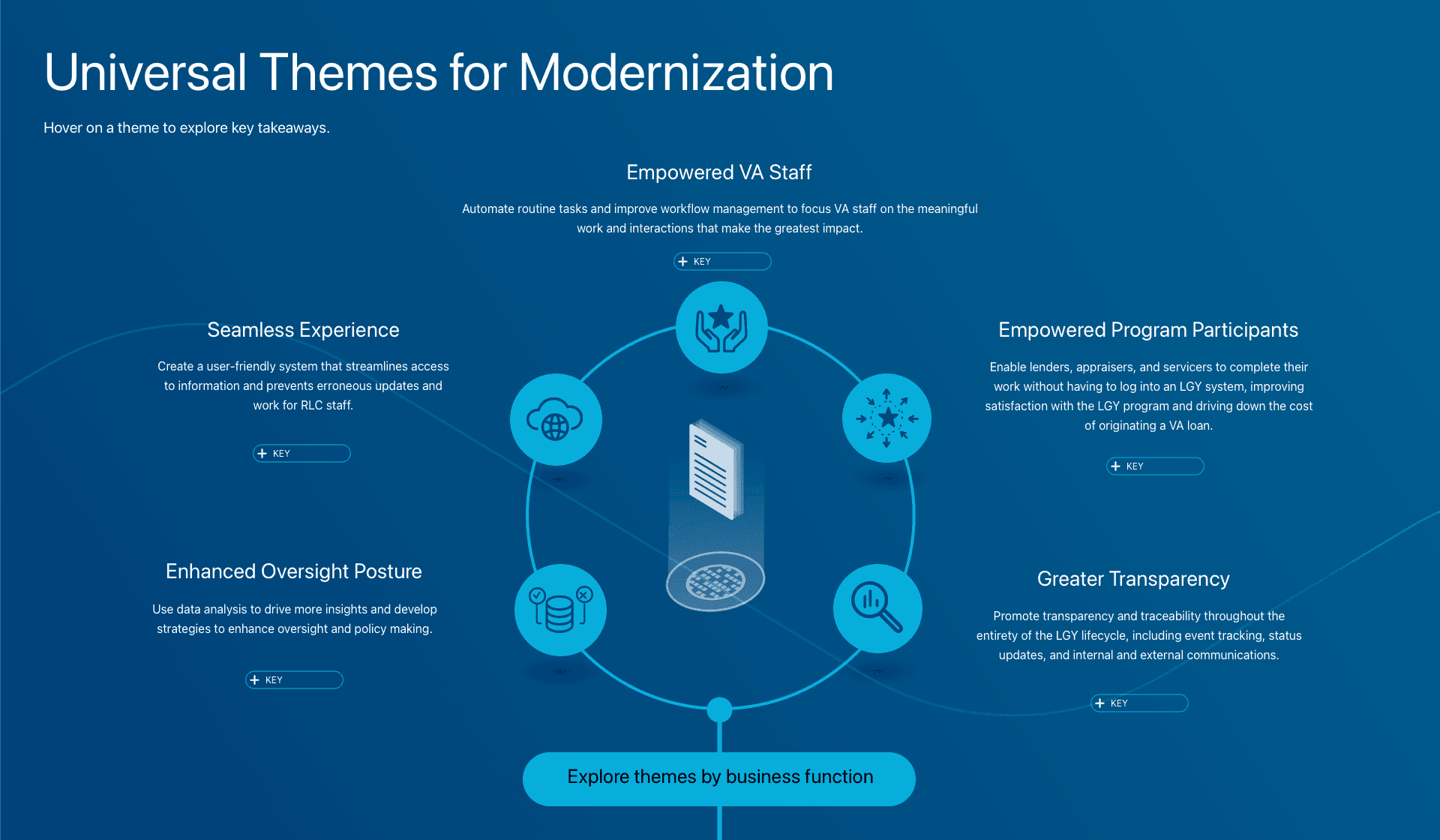
Once we had completed our interviews we started affinitizing our findings into high level themes that we could use as a consistent north star for us to follow. We also developed a current state process flow. This process flow allowed us to see where there were similarities and differences in each of the personas experiences. We clearly documented these process flows and roadblocks in a clickable prototype that allowed us to show the client exactly what we heard and where the issues were. We utilized this deliverable to push us into the next phase of our approach.
The Future State
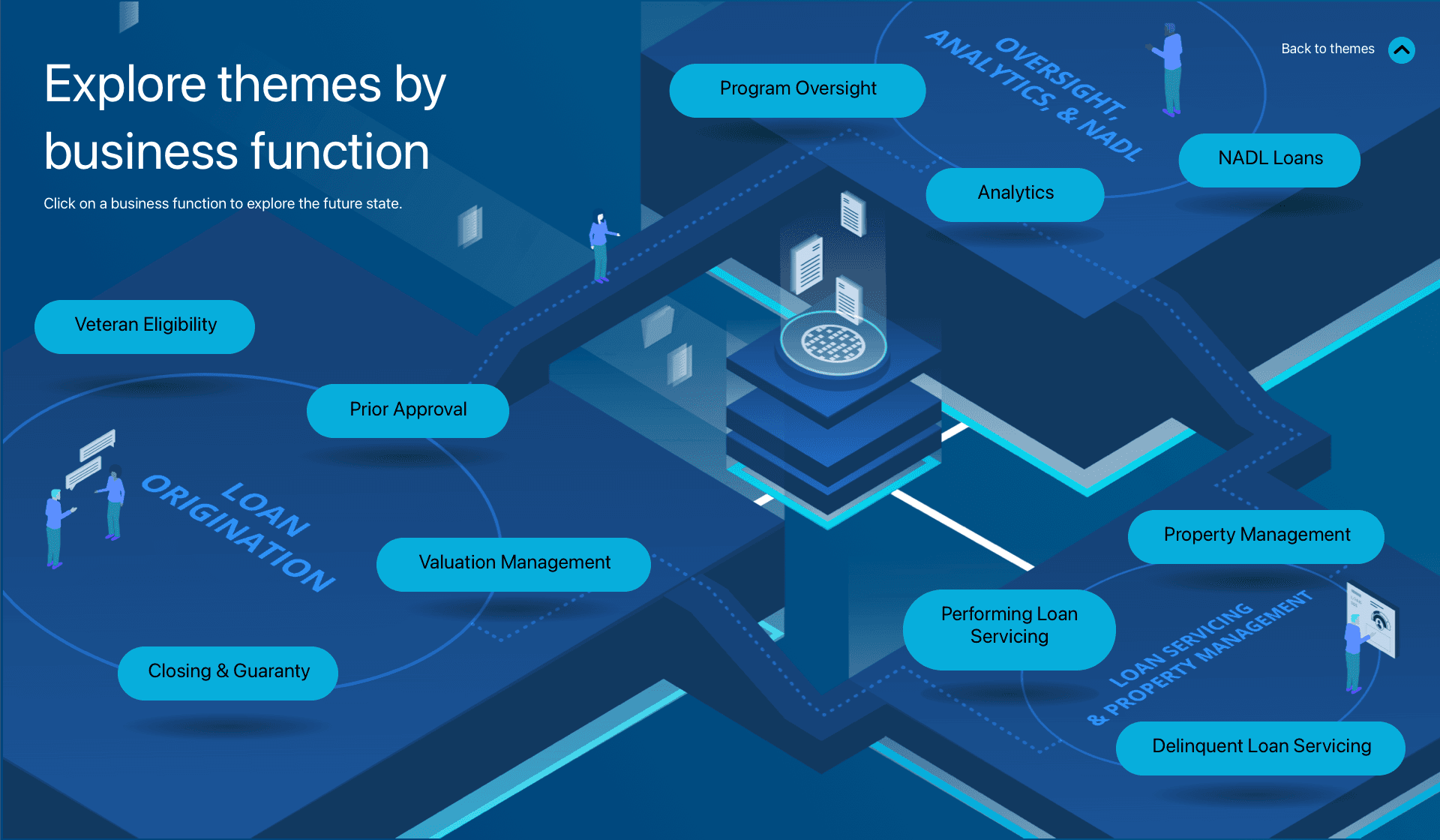
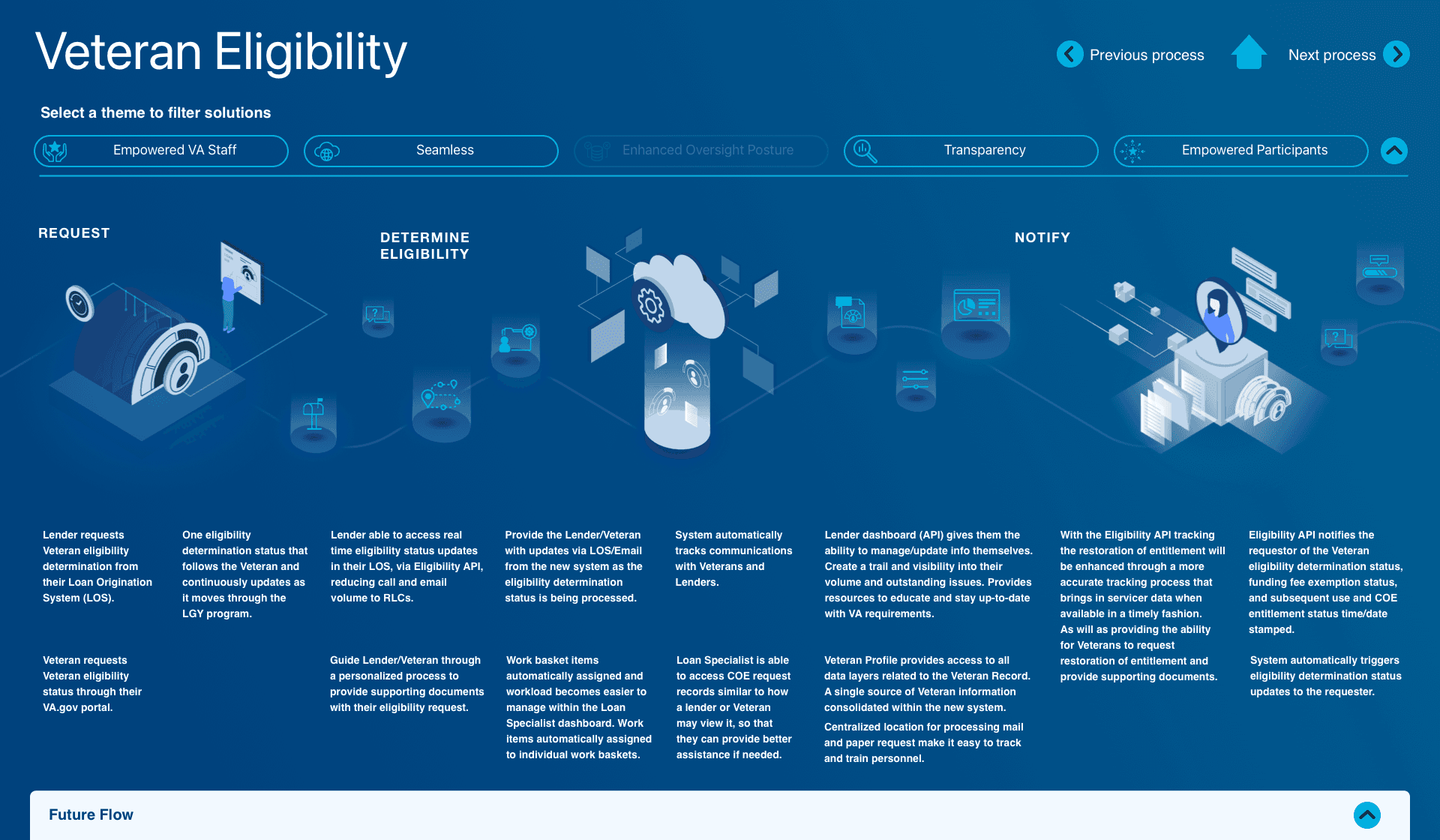
Having discovered where our biggest hurdles were, we set out to design and demo what the future could hold. We delivered a future state vision for what the product could look and function like. We built everything from a user friendly interface to an AI tool for internal personas. We designed services to automate some of the more tedious and manual processes that were previously causing lots of heartache. The demo ultimately won us an extension of work and allowed us to jump in and get our hands dirty designing the future state user experience.
The Delivery
Our team seamlessly integrated into the delivery process. We added two more UX designers to our team and began to position ourselves properly in the delivery teams processes. We used SAFe Agile to manage our day-to-day workloads and delivery expectations. I made sure that our design team was positioned as the spearhead of our delivery process. Our first goal was to establish a design system for our team to use. We utilized USWDS (as required by the client) and customized it to our branding. With this tool we were able to get well ahead of the development team, working closely with the client and the SME’s to validate our designs and flows long before any wireframe got placed into a sprint. Within the first two months of us building wireframes we were able to build a reasonable cushion of backlog work for the development team. We prided ourselves on always having enough work completed, validated, and approved every sprint for the development team to work from.

